
Monday, January 29, 2007
Questions or Suggestions for Topics that you would like to see in this blog
If you have questions or suggestions for topics tha you want to find in this blog, please write them in the comment box.


Tuesday, January 23, 2007
Sinulog Festival-Cebu City
SINULOG FESTIVAL
photocredit
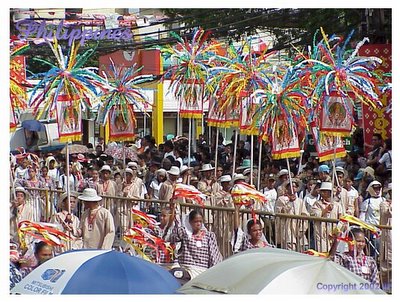
The Sinulog is a dance ritual in honor of Santo Nino. It is held every year in Cebu City on the third Sunday of January.
This Sinulog dance which is the traditional and ritual dance in honor of Santo Nino is distinguished from the Ati-atihan from Panay Island.
Accompanied by the sound of the drums the sequences include the
all the time moving two steps forward followed by one step backward. Though the dance is already very old, the parade that characterized the festival was started onl in 1980.
Contrary to the belief of some, Sinulog was already danced by the locals in honor of their wooden statues in the period before the Cebuanos were baptized. Later on, after the image of the famous Santo Niño was brought to Cebu and the Catholic faith was established in the region, the dance was made a part of the early fiesta in honor of the Santo Nino.
While dancing, people are shouting petitions and thanksgivings to the Santo Nino. Shouting is necessary because the pilgrims have to be sure that they will be heard by the Santo Nino.
"Pit Senor! Senor Santo Nino."
SINULOG FESTIVAL,Mardi Gras,Sto.Nino,Cebu City

photocredit
The Sinulog is a dance ritual in honor of Santo Nino. It is held every year in Cebu City on the third Sunday of January.
This Sinulog dance which is the traditional and ritual dance in honor of Santo Nino is distinguished from the Ati-atihan from Panay Island.
Accompanied by the sound of the drums the sequences include the
all the time moving two steps forward followed by one step backward. Though the dance is already very old, the parade that characterized the festival was started onl in 1980.
Contrary to the belief of some, Sinulog was already danced by the locals in honor of their wooden statues in the period before the Cebuanos were baptized. Later on, after the image of the famous Santo Niño was brought to Cebu and the Catholic faith was established in the region, the dance was made a part of the early fiesta in honor of the Santo Nino.
While dancing, people are shouting petitions and thanksgivings to the Santo Nino. Shouting is necessary because the pilgrims have to be sure that they will be heard by the Santo Nino.
"Pit Senor! Senor Santo Nino."
SINULOG FESTIVAL,Mardi Gras,Sto.Nino,Cebu City
Monday, January 22, 2007
ATI-ATIHAN-KALIBO, AKLAN
ATI-ATIHAN-KALIBO, AKLAN
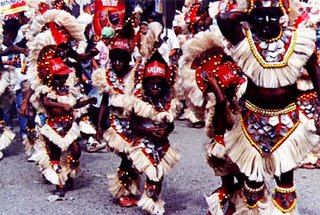
SINULOG FESTIVAL is to Cebu City while the Ati-Atihan is a festival in honor of the Holy Infant Jesus in Kalibo, Aklan also celebrated in the third week of January. The dancing however is done on the rhythms of the drums that makes this festival comparable with carnival in Rio in Brazil.
A parade is participated by celebrants who paint their faces in many different ways and who are dressed in the most exceptional costumes.
The practise of painting the faces was long observed before the
Spaniards came. It symbolized the friendship between the light-skinned immigrants from the island of Borneo (Kalimantan) in Indonesia and the Atis, the local people of Panay. The Ati (negritos), a small and dark (black) kinky-haired people, sold them a small piece of land and allowed them to settle down in the lowlands. The Atis themselves, lived more upland in the mountains.
One time the Ati people was in need of food because of a bad harvest in their homelands. They came down to the lowlands of the Maraynon and asked them food. Every year since then, the Atis came down to the lowland inhabitants to ask for some food. They danced and sang in gratitude for the help.
SINULOG FESTIVAL,eyes,Sto.Nino,Cebu City,Ati-Atihan

SINULOG FESTIVAL is to Cebu City while the Ati-Atihan is a festival in honor of the Holy Infant Jesus in Kalibo, Aklan also celebrated in the third week of January. The dancing however is done on the rhythms of the drums that makes this festival comparable with carnival in Rio in Brazil.
A parade is participated by celebrants who paint their faces in many different ways and who are dressed in the most exceptional costumes.
The practise of painting the faces was long observed before the
Spaniards came. It symbolized the friendship between the light-skinned immigrants from the island of Borneo (Kalimantan) in Indonesia and the Atis, the local people of Panay. The Ati (negritos), a small and dark (black) kinky-haired people, sold them a small piece of land and allowed them to settle down in the lowlands. The Atis themselves, lived more upland in the mountains.
One time the Ati people was in need of food because of a bad harvest in their homelands. They came down to the lowlands of the Maraynon and asked them food. Every year since then, the Atis came down to the lowland inhabitants to ask for some food. They danced and sang in gratitude for the help.
SINULOG FESTIVAL,eyes,Sto.Nino,Cebu City,Ati-Atihan
Saturday, January 20, 2007
MANOBO DANCE
MANOBO DANCE

The various dances among the Manobo entertain, educate, and propitiate the gods. Among the Agusanon are the sinundo/singangga, dance ritual to ward off epidemic busau; pangaliyag, courtship dance; pangasawa, marriage ritual; kinugsik-kugsik, squirrel dance. Those witnessed and described by Garvan (1931) in 1910 are the bathing dance, honey gathering dance, hair plucking dance, sexual dance, and dagger or sword dance.
The Agusanon and Umayamnon saet, Cotabato saut, and Western Bukidnon kedsaut is a war dance of one or two warriors, each holding either a war bolo or a spear with a bell attached to it, and a shield. In the kedsaut, the two dancers begin from opposite sides of the dance area, brandishing their shields and shaking their spears. First, they dance sideways, then they imitate a hawk in flight before they finally engage in mock combat, each hitting the other's shield with his spear and crashing shield against shield, "navel to navel" (Plenda 1989:139). Rhythmic music is provided by the bells attached to their spears.
An Arumanen Manobo verson of the war dance is the mangmangayan, with two bagani each brandishing a sundang (bolo) and a kampilan (sword). Every once in a while, in the course of the dance, they adjust their tangkulo (headgear). The Pulangi Manobo's version of the mangmangayan ends with a peace pact and a celebration dance which the women join. The datu/bai, acting as arbiter, places a kerchief on the ground and all the warriors place their weapons on it to signify peace and end of the hostilities.
Other Arumanen Manobo dances are the paningara (bee hunt), pegako (courtship dance), and pendaraka (woman's response to the courtship). The kinudlat ng sayao demonstrates the performer's ability to touch his shoulders with his toes. The penarangas-tangas and manmanaol are both hawk dances, which a bagani and a woman perform. In the manmanaol, the hawk catches its prey, represented by a kerchief on the floor.
The binanog (hawk dance) mimics a hawk sweeping down on its prey. The Cotabato Manobo version has a female dancer using a kerchief, which she drops and then picks up while using her hands and arms to imitate the hawk. The steps are simple hop-steps and slide-steps. She wears earrings that reach down to the shoulders and anklets. The beat is a slow 1-2-3-4. Among the Pulangi Manobo, the binanog is a component of the courtship dance. Two other Manobo dances imitating bird movements are the kakayamatan and the bubudsil (hornbill). These dances may be accompanied by gongs or zithers.
A vigorous courtship dance is the pig-agawan, which involves two women vying for the attention of one man. A bai and a datu try to settle the dispute between the two women. A slow walking dance exclusively for females of marriageable age is the takumbo, which signifies their availability for marriage. It is named after the musical instrument that accompanies their movements. Another woman's dance, also called takumbo, is performed by one woman who simultaneously dances and plucks the takumbo. She rests the takumbo on her waist while she holds it in her left hand.
In Kidapawan, Cotabato, girls dance around the mortar to the beat of their pestles as they pound rice. During harvest celebrations, the Tigwahanon have an occupational dance called inamong, in which men and women execute monkeylike steps as they step on rice stalks to separate the chaff from the grain. The bakbak is a children's comical dance; they hop and make noises by slapping their bodies while maintaining a squatting position throughout.
The agpanikop (fish hunt dance) of the Manobo of Matalam, north Cotabato, portrays a boy, torch and spear in hand, looking for edible frogs. A second boy joins him in the hunt after the initial mutual wariness is dispelled. The second boy is wounded and writhes in pain, the first boy fetches the womenfolk and the baylan. The dance turns into a healing dance ritual and the boy, fully recovered, joins the women and baylan in a thanksgiving dance.
The pangayam is a reenactment of a hunter in pursuit of a wild boar. He carries his lance and bolo and is accompanied by his dog, represented by a bottle to which a strip of red cloth is tied.
In the Umayamnon inanak-anak/bata-bata, a girl mimes a woman's chores. She pretends to take care of a baby, putting it to sleep, trying to stop its carrying, feeding it with milk. She goes to the fields to dig for camote, then washes and makes herself beautiful before a stream.
The Tigwahanon bangkakaw is a festival dance celebrating a war victory or a bountiful catch of fish from the river. The centerpiece is the bangkakaw (log), which the women beat with the ando (pestles) and the men, with lampus (rods) while doing some stunts over and under it. They provide the accompaniment for the dancing fisherfolk, who carry their catch in their bubo (fish traps) and liag (large basket with a headsling).
A thanksgiving ritual in Magpet, North Cotabato, is the binadbad, which begins with the men facing heavenwards as they address the gods. Atop (coconut palms) are suspended at the center of the dance area. Then women join the dance, their attention on the atop, which they gather one by one. They then vary their formations, each holding an atop. Another woman joins them, gathers all the atop from them, and returns these to the center.
Among the western Bukidnon Manobo, the dance of the healing ritual is the legudas. Women holding hands form a circle around the baylan, who chants to the busaw, requesting it to return to the deity that has sent it to cause the illness. The men then stand between the women in the circle. The women wear the saya (wraparound skirt), sinu-laman (embroidered blouse), embroidered belt, and tikes (knee band) with the seriyew (pewter bells). The rhythmic music is provided by the seriyew.
The haklaran, which has been observed among the Agusanon, Tigwahanon, and Umayamnon, is a healing ritual performed by a male and female baylan. A prelude to this is the ritual dressing of the male baylan in woman's skirt, usually a malong, for it is improper for a man to perform the haklaran in a man's attire. This dance is performed around the sankaw, an altar bearing the sacrificial offering of a pig's head.
The suyad-buya is the healing ritual dance in Magpet, North Cotabato. It dramatizes the process by which the baylan heals a sick boy as his mother and a group of young women watch. The women prepare the paraphernalia by bringing in a table on which they set four coconut shells containing burning incense. They also carry red ribbons meant to drive the evil spirits away. As they dance in the background, the baylan enters, dances around the patient and waves a white chicken overhead. The shaman takes the chicken to the table, cuts its neck, and smears the patient's forehead with its blood. The boy regains his health and dances joyfully with the women and his mother.

The various dances among the Manobo entertain, educate, and propitiate the gods. Among the Agusanon are the sinundo/singangga, dance ritual to ward off epidemic busau; pangaliyag, courtship dance; pangasawa, marriage ritual; kinugsik-kugsik, squirrel dance. Those witnessed and described by Garvan (1931) in 1910 are the bathing dance, honey gathering dance, hair plucking dance, sexual dance, and dagger or sword dance.
The Agusanon and Umayamnon saet, Cotabato saut, and Western Bukidnon kedsaut is a war dance of one or two warriors, each holding either a war bolo or a spear with a bell attached to it, and a shield. In the kedsaut, the two dancers begin from opposite sides of the dance area, brandishing their shields and shaking their spears. First, they dance sideways, then they imitate a hawk in flight before they finally engage in mock combat, each hitting the other's shield with his spear and crashing shield against shield, "navel to navel" (Plenda 1989:139). Rhythmic music is provided by the bells attached to their spears.
An Arumanen Manobo verson of the war dance is the mangmangayan, with two bagani each brandishing a sundang (bolo) and a kampilan (sword). Every once in a while, in the course of the dance, they adjust their tangkulo (headgear). The Pulangi Manobo's version of the mangmangayan ends with a peace pact and a celebration dance which the women join. The datu/bai, acting as arbiter, places a kerchief on the ground and all the warriors place their weapons on it to signify peace and end of the hostilities.
Other Arumanen Manobo dances are the paningara (bee hunt), pegako (courtship dance), and pendaraka (woman's response to the courtship). The kinudlat ng sayao demonstrates the performer's ability to touch his shoulders with his toes. The penarangas-tangas and manmanaol are both hawk dances, which a bagani and a woman perform. In the manmanaol, the hawk catches its prey, represented by a kerchief on the floor.
The binanog (hawk dance) mimics a hawk sweeping down on its prey. The Cotabato Manobo version has a female dancer using a kerchief, which she drops and then picks up while using her hands and arms to imitate the hawk. The steps are simple hop-steps and slide-steps. She wears earrings that reach down to the shoulders and anklets. The beat is a slow 1-2-3-4. Among the Pulangi Manobo, the binanog is a component of the courtship dance. Two other Manobo dances imitating bird movements are the kakayamatan and the bubudsil (hornbill). These dances may be accompanied by gongs or zithers.
A vigorous courtship dance is the pig-agawan, which involves two women vying for the attention of one man. A bai and a datu try to settle the dispute between the two women. A slow walking dance exclusively for females of marriageable age is the takumbo, which signifies their availability for marriage. It is named after the musical instrument that accompanies their movements. Another woman's dance, also called takumbo, is performed by one woman who simultaneously dances and plucks the takumbo. She rests the takumbo on her waist while she holds it in her left hand.
In Kidapawan, Cotabato, girls dance around the mortar to the beat of their pestles as they pound rice. During harvest celebrations, the Tigwahanon have an occupational dance called inamong, in which men and women execute monkeylike steps as they step on rice stalks to separate the chaff from the grain. The bakbak is a children's comical dance; they hop and make noises by slapping their bodies while maintaining a squatting position throughout.
The agpanikop (fish hunt dance) of the Manobo of Matalam, north Cotabato, portrays a boy, torch and spear in hand, looking for edible frogs. A second boy joins him in the hunt after the initial mutual wariness is dispelled. The second boy is wounded and writhes in pain, the first boy fetches the womenfolk and the baylan. The dance turns into a healing dance ritual and the boy, fully recovered, joins the women and baylan in a thanksgiving dance.
The pangayam is a reenactment of a hunter in pursuit of a wild boar. He carries his lance and bolo and is accompanied by his dog, represented by a bottle to which a strip of red cloth is tied.
In the Umayamnon inanak-anak/bata-bata, a girl mimes a woman's chores. She pretends to take care of a baby, putting it to sleep, trying to stop its carrying, feeding it with milk. She goes to the fields to dig for camote, then washes and makes herself beautiful before a stream.
The Tigwahanon bangkakaw is a festival dance celebrating a war victory or a bountiful catch of fish from the river. The centerpiece is the bangkakaw (log), which the women beat with the ando (pestles) and the men, with lampus (rods) while doing some stunts over and under it. They provide the accompaniment for the dancing fisherfolk, who carry their catch in their bubo (fish traps) and liag (large basket with a headsling).
A thanksgiving ritual in Magpet, North Cotabato, is the binadbad, which begins with the men facing heavenwards as they address the gods. Atop (coconut palms) are suspended at the center of the dance area. Then women join the dance, their attention on the atop, which they gather one by one. They then vary their formations, each holding an atop. Another woman joins them, gathers all the atop from them, and returns these to the center.
Among the western Bukidnon Manobo, the dance of the healing ritual is the legudas. Women holding hands form a circle around the baylan, who chants to the busaw, requesting it to return to the deity that has sent it to cause the illness. The men then stand between the women in the circle. The women wear the saya (wraparound skirt), sinu-laman (embroidered blouse), embroidered belt, and tikes (knee band) with the seriyew (pewter bells). The rhythmic music is provided by the seriyew.
The haklaran, which has been observed among the Agusanon, Tigwahanon, and Umayamnon, is a healing ritual performed by a male and female baylan. A prelude to this is the ritual dressing of the male baylan in woman's skirt, usually a malong, for it is improper for a man to perform the haklaran in a man's attire. This dance is performed around the sankaw, an altar bearing the sacrificial offering of a pig's head.
The suyad-buya is the healing ritual dance in Magpet, North Cotabato. It dramatizes the process by which the baylan heals a sick boy as his mother and a group of young women watch. The women prepare the paraphernalia by bringing in a table on which they set four coconut shells containing burning incense. They also carry red ribbons meant to drive the evil spirits away. As they dance in the background, the baylan enters, dances around the patient and waves a white chicken overhead. The shaman takes the chicken to the table, cuts its neck, and smears the patient's forehead with its blood. The boy regains his health and dances joyfully with the women and his mother.
Tuesday, January 9, 2007
PROCESSION OF THE BLACK NAZARENE, QUIAPO, MANILA
PROCESSION OF THE BLACK NAZARENE, QUIAPO, MANILA
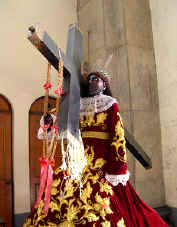
Every 9th of January of the year and on Good Friday, a large procession takes
place through the streets of Quiapo, a small part of metro Manila. The procession which
dates back from the 17th centuryis joined by thousands of with the life-sized, black wooden statue of Jesus (of Nazarene). These men walk barefoot as a sign of humility.
The men yell "Viva Senor" to the Statue brought to Manila in 1606. People believe that a miracle can happen after touching it.
All participants in the procession hope that they will have the opportunity to touch the wooden statue. They hope that this will protect them from harm and ensure health in the future. Some of them follow the statue during the procession because they believe it is an atonement of their sins or hope for some miracle.
SINULOG FESTIVAL,Black Nazarene,Sto.Nino,Cebu City,Ati-Atihan

Every 9th of January of the year and on Good Friday, a large procession takes
place through the streets of Quiapo, a small part of metro Manila. The procession which
dates back from the 17th centuryis joined by thousands of with the life-sized, black wooden statue of Jesus (of Nazarene). These men walk barefoot as a sign of humility.
The men yell "Viva Senor" to the Statue brought to Manila in 1606. People believe that a miracle can happen after touching it.
All participants in the procession hope that they will have the opportunity to touch the wooden statue. They hope that this will protect them from harm and ensure health in the future. Some of them follow the statue during the procession because they believe it is an atonement of their sins or hope for some miracle.
SINULOG FESTIVAL,Black Nazarene,Sto.Nino,Cebu City,Ati-Atihan
Friday, December 15, 2006
Simbang Gabi
Simbang Gabi

Christmas in the Philippines starts when the month of the year ends with the BER.
This is when radio stations start playing Christmas carols on the air. Ours is one country that celebrates a mixture of Western and native Christmas traditions.
We send Christmas cards, decorate our houses with Christmas trees, mistletoes, Santa Claus and long strings of lights.
Manila and Makati, the two prime cities are converted into little Paris because of the galore of lights.
The Filipino Chistmas traditions however begin in December 15 for the dawn mass or Simbang Gabi. Masses are held as early as 5' o clock in the morning for nine consecutive days which culiminate on December 24, Christmas eve.
Young people look forward to seeing their friends dressed in their best; office workers come in their work clothes and mothers come with their sleepy kids whose motivation to come is the bibingka and puto bumbong that they buy after the mass.
back to Now What,Ca t
Christmas Songs,Tagalog Christmas Songs,OPM Christmas Songs

Christmas in the Philippines starts when the month of the year ends with the BER.
This is when radio stations start playing Christmas carols on the air. Ours is one country that celebrates a mixture of Western and native Christmas traditions.
We send Christmas cards, decorate our houses with Christmas trees, mistletoes, Santa Claus and long strings of lights.
Manila and Makati, the two prime cities are converted into little Paris because of the galore of lights.
The Filipino Chistmas traditions however begin in December 15 for the dawn mass or Simbang Gabi. Masses are held as early as 5' o clock in the morning for nine consecutive days which culiminate on December 24, Christmas eve.
Young people look forward to seeing their friends dressed in their best; office workers come in their work clothes and mothers come with their sleepy kids whose motivation to come is the bibingka and puto bumbong that they buy after the mass.
back to Now What,Ca t
Christmas Songs,Tagalog Christmas Songs,OPM Christmas Songs
Monday, October 23, 2006
Juan Luna

Juan Luna
(1857-1899)
A genius of the brush and a patriot of the highest order. Creator
of the world-famous painting, SPOLARIUM, which was awarded the gold
medal in the Exposicion Nacional de Bellas Artes in Madrid in 1884.
It is also known as the greatest painting of all times.
Juan Luna y Novicio was born on October 23, 1857 in Badoc, Ilocos
Norte, Philippines, the third child of seven children. He showed
took up painting and traveled to Rome to study the masters. He settled
in Paris and married Maria de la Paz, a prominent Filipina from
the Mestizaje family of Pardo de Tavera. In a rage over his suspicion
of infidelity on the part of his wife, he mercilessly shot her and
her mother to death in September 1892. Tried by a French court
and subsequently convicted in 1893, he was sentenced to pay the
victims' immediate kin but one franc each for their loss, as the
court had deemed the murders a crime of passion. In 1894, Luna
returned to the Philippines after an absence of almost 20 years.
His most famous piece, The Spoliarium, for which he won top
prize at the 1884 Madrid Exposition, is currently in the National
Museum in Manila.
Upon his return to the Philippines, he was arrested two years
later under suspicion of sedition. He was later pardoned. His
brother, General Antonio Luna, was an active participant in the insurgent Katipunan movement.
In 1898, after the United States defeated Spain in the Spanish-American
War, the fledgling Philippine Republic appointed him as a delegate
to the Paris convention and to Washington, D.C. to help gain
recognition of Philippine sovereignty and independence.
Luna died in Hong Kong, December 7, 1899. He was rushing home
from Europe after hearing of his brother’s assassination by
members of the Katipunan.
Juan Luna,Philippine National Heroes
Tuesday, September 5, 2006
Talumpati ni Noli De Castro sa Lorenzo Sumulong Gawad Parangal
Lorenzo S. Sumulong Gawad Parangal, 9 September 2005
MAGANDANG HAPON SA INYONG LAHAT.
NAIS KONG MAGPASALAMAT SA INYONG MAINIT NA PANGTANGGAP SA AKIN AT SA AKING MGA KASAMAHAN DITO SA PROBINSYA NG RIZAL. IPINA-AABOT KO ANG AKING TAOS-PUSONG PAGBATI SA INYONG MGA TAGA-RIZAL, AT SA MGA KAMAG-ANAK NI SENADOR LORENZO S. SUMULONG. MABUHAY PO KAYO.
AKO PO AY LUBOS NA NAGAGALAK NA MAKASAMA KAYO SA PAGDIRIWANG NG IKA-ISANG DAANG ANIBERSARYO NG KAPANGANAKAN NI SENADOR SUMULONG AT SA PAGBIBIGAY NG LORENZO S. SUMULONG GAWAD PARANGAL SA OUTSTANDING ACHIEVERS NG BAYAN NG ANTIPOLO AT PROBINSYA NG RIZAL. KAYA NAMAN AGAD AKONG NAGPAUNLAK NANG IMBITAHAN AKO NG INYONG KONGRESMAN ANG NAPAKAGALING AT HINAHANGAN KONG SI KONGRESMAN VICTOR SUMULONG.
NAPAPANAHONG PANANALITA
“KUNG SI BONIFACIO AY BUHAY NGAYON, ILAN KAYA SA MGA PULITIKO NGAYON, ILAN KAYA SA MGA TAONG NASA PAMAHALAAN, ILAN KAYA SA MGA ITINURING NA HALIGI NG LIPUNAN, ANG KANYANG TATANGGAPIN SA KANIYANG KATIPUNAN NG MGA ANAK NG BAYAN? ILAN KAYA ANG ITATABOY NIYA AT PAGSASABIHAN: HINDI KAYO MAKAKASAPI PAGKA’T ANG INYONG PAG-IBIG SA BAYAN AY BUKA SA BIBIG NGUNIT KABIG SA DIBDIB, ANG PAGHAHANGAD NINYO SA TUNGKULIN O KAPANGYARIHAN AY HINDI UPANG MAKADAMAY SA INYONG KAPWA KUNDI UPANG MAGPASASA AT MAGPAUNLAD SA SARILING KAPAKANAN.”
NAPAKABIGAT NG MGA KATAGANG ITO. SUBALI’T ITO PO AY HINDI SA AKIN NANGGALING, KUNDI SA TALUMPATI NG ISANG DATING HALIGI NG SENADO, SI SENADOR LORENZO SUMULONG.
NAKAMAMANGHA NA ANG PANANALITA NG ISANG MAGALING NA TAO AY NANANATILING MAKABULUHAN KAHIT ILANG DEKADA NA ANG LUMIPAS. MARAHIL ANG SALITANG TOTOO, TULAD NG KATOTOHANAN MISMO, AY TALAGANG HINDI MALILIMUTAN NG KASAYSAYAN.
MALALIM ANG PAGSUSURI AT PAGTINGIN NI SENADOR SUMULONG SA ATING LIPUNAN. MASAKIT ANG KANYANG PUNA HINDI LANG SA MGA NAMUMUNO, KUNDI PATI NA RIN SA LAHAT NANG NANUNUNGKULAN SA PAMAHALAAN.
SA KASALUKUYANG PANAHON, MARAHIL AY MAARI RIN NATING ITANONG: KUNG SI SENADOR SUMULONG AY BUHAY NGAYON, ANO KAYA ANG KANYANG SASABIHIN TUNGKOL SA ATING MGA PINUNO, TUNGKOL SA ATING MGA INSTITUSYON, AT TUNGKOL SA ATING PULITIKA?
MAKAKATIKIM DIN KAYA TAYO NG KANYANG MAANGHANG NA PUNA, O KAYA’Y BANAYAD NA PAALALA NA DAPAT TAYONG MAGING TAPAT SA ATING MGA TUNGKULIN AT SA ATING INANG BAYAN?
SI SENADOR SUMULONG BILANG MODELO
SINO NGA BA SI SENADOR SUMULONG? KAYONG MGA KABATAAN AY WALANG PERSONAL NA KARANASAN TUNGKOL SA TINATAWAG NA “GLORIOUS DAYS OF THE PHILIPPINE SANATE”. ITO ANG PANAHON KUNG SAAN NAGSAMA-SAMA ANG NAPAKAGAGALING NA SENADOR NG BANSA --- MGA NAGLALAKIHANG HIGANTE NG PULITIKA SA PILIPINAS, MGA TAONG MAY MATINDING PAGMAMAHAL SA BAYAN AT SA KAPWA PILIPINO, MGA PINUNONG MAY PRINSIPYO AT DANGAL.
SA PANAHONG YAON NABUHAY AT NAGLINGKOD SI SENADOR SUMULONG.
AT ANG PAGLILINGKOD NIYA SA BAYAN AY NAGSIMULA NOONG SIYA AY ESTUDYANTE PA LAMANG SA UNIBERSIDAD NG PILIPINAS. TUMAKBO AT NAGWAGI SIYA BILANG NUMBER 1 COUNCILOR NG ANTIPOLO HABANG SIYA’Y NAG-AARAL PA LANG NG ABUGASYA. DAHIL SA KANYANG TALINO AT SIPAG, SIYA ANG PINAKA-UNANG NAGTAPOS NA MAGNA CUM LAUDE SA UP. NAGING BAR TOPNOTCHER SIYA NOONG 1929. AT TATLONG TAON PAGKATAPOS NITO, NAGTAPOS SIYA NG MASTER OF LAWS SA HARVARD UNIVERSITY.
NAKILALA SI LORENZO SUMULONG BILANG EKSPERTO SA FOREIGN RELATIONS. KAHIT SA UNITED NATIONS, NAGPAKITA SIYA NG DETERMINASYON AT TAPANG NG PILIPINO. HANGGANG NGAYON AY NAPAG-UUSAPAN PA SA UN ANG PAKIKIPAGBALITAKTAKAN NI SENADOR SUMULONG KAY PREMIER NIKITA KHRUSCHEV NG RUSSIA TUNGKOL SA PAGBIBIGAY NG KALAYAAN SA MGA NASASAKUPAN NG MALALAKAS NA BANSA. NAPIKON ANG SOVIET PREMIER, AT HINUBAD NI KRUSCHEV ANG KANYANG SAPATOS --- SABI NG ILAN, AY UPANG IPUKPOK SA MESA, SABI NAMAN NG IBA AY UPANG IBATO KAY SENADOR SUMULONG.
SI SENADOR SUMULONG AY ISA RING MAGALING NA IMBESTIGADOR SA KONGRESO. WALANG TAKOT O PAGDADALAWANG-ISIP. HINDI SIYA NANGIMING IBUNYAG ANG KATOTOHANAN SA APAT NA CONGRESSIONAL INVESTIGATIONS NA KANYANG PINAMUNUAN:
UNA, ANG IMPEACHMENT PROCEEDINGS LABAN KAY PRESIDENT QUIRINO DAHIL SA BINTANG NA PAGLUSTAY NG KABAN NG BAYAN;
IKALAWA, ANG IMBESTIGASYON SA TAMBOBONG-BUENAVISTA ESTATE DEAL KUNG SAAN ANG KAPATID NG PRESIDENTE AT ANG KALIHIM NG KATARUNGAN AY NADAMAY;
IKATLO, ANG TUNGKOL SA MULTI-MILLION LOBBY NG MGA TSINO KAY PRESIDENTE MAGSAYSAY PARA SA LEGALIZATION NG MGA TEMPORARY CHINESE VISITORS;
AT IKA-APAT, ANG SIKAT NA STONEHIL INVESTIGATION KUNG SAAN NADAMAY ANG OFFICE OF THE PRESIDENT, MGA SENADOR, KONGRESISTA, MGA OPISYAL NG INTERNAL REVENUE AT CUSTOMS, AT IBA PANG OPISYAL NG GOBYERNO.
SUBALIT TALAGANG NASUBUKAN ANG KANYANG PAGIGING STATESMAN AT ANG KANYANG PAGKATAO NANG PINILI NIYANG MAGRETIRE NA LAMANG DAHIL HINDI SIYA NAISAMA SA SENATORIAL CANDIDATES NG NATIONALISTA PARTY NOONG 1967. KAHIT ISA NA SIYA SA MGA NANGUNANG KANDIDATO SA SENADO NOONG NAKARAANG ELEKSIYON, NATALO SIYA NI ATTY. SALVADOR LAUREL SA NOMINASYON NG PARTIDO.
SINUBUKAN SIYANG KUMBINSIHIN NG LIBERAL PARTY NA LUMIPAT SA KANILA. ANG MALACANANG NAMAN, NAG-OFFER NG MATAAS NA POSISYON SA GOBYERNO. SUBALI’T SI SENADOR SUMULONG AY HINDI NAGPADALA SA MGA ITO. ANG KANYANG NAGING DESISYON: MAGRETIRE NA MUNA KAYSA NAMAN LUMIPAT NG PARTIDO O KAYA’Y KUMUHA NG POSISYON SA GOBYERNO.
TALAGANG DAPAT SIYANG ITURING NA MODELO HINDI LANG NG NAKARAANG HENERASYON, KUNDI PATI NA RIN NG KASALUKUYAN. MERON PA BANG KATULAD NIYA?
PAGTATAPOS
AKO NA RIN PO ANG SASAGOT NITO. ANG SAGOT KO, MERON PA.
MARAMI PANG MGA LIDER, MGA PULITIKO, AT MGA PILIPINO NA MAY KAKAYAHANG MAGSAKRIPISYO PARA SA BAYAN. MARAMI PANG BAYANI –TULAD NG MGA GURO, MGA MAGSASAKA, MGA MALIIT NA ENTREPRENOR, MGA OVERSEAS WORKERS, MGA ORDINARYONG PILIPINO NA NABUBUHAY NG MARANGAL AT SUMUSUNOD SA BATAS.
MGA KAIBIGAN, MARAMING PAGSUBOK ANG PINAGDADAANAN NG ATING BANSA, AT MARAMI PANG DARATING. SUBALI’T AKO’Y MAY MALAKING PAGTITIWALA SA ATING MGA KABABAYAN AT SA ATING MGA LIDER.
NANINIWALA AKO NA SA KAIBUTURAN NG PUSO NATING MGA PILIPINO, NAROON PA RIN ANG PAGMAMAHAL SA BANSA AT ANG PAGNANASANG MAGLINGKOD NG TAPAT --- MGA KATANGIANG ISINABUHAY NI SENADOR SUMULONG.
SANA AY MATUTUTO TAYO SA HALIMBAWANG IPINAKITA NIYA SA ATIN. MAPALAD TAYO SA PAGKAKAROON NG ISANG HUWARAN NA TULAD NI SENADOR LORENZO SUMULONG.
MARAMING SALAMAT PO AT MAGANDANG HAPON, BAYAN!
talumpati,Linggo ng Wika,Noli de Castro,Tagalog speeches
MAGANDANG HAPON SA INYONG LAHAT.
NAIS KONG MAGPASALAMAT SA INYONG MAINIT NA PANGTANGGAP SA AKIN AT SA AKING MGA KASAMAHAN DITO SA PROBINSYA NG RIZAL. IPINA-AABOT KO ANG AKING TAOS-PUSONG PAGBATI SA INYONG MGA TAGA-RIZAL, AT SA MGA KAMAG-ANAK NI SENADOR LORENZO S. SUMULONG. MABUHAY PO KAYO.
AKO PO AY LUBOS NA NAGAGALAK NA MAKASAMA KAYO SA PAGDIRIWANG NG IKA-ISANG DAANG ANIBERSARYO NG KAPANGANAKAN NI SENADOR SUMULONG AT SA PAGBIBIGAY NG LORENZO S. SUMULONG GAWAD PARANGAL SA OUTSTANDING ACHIEVERS NG BAYAN NG ANTIPOLO AT PROBINSYA NG RIZAL. KAYA NAMAN AGAD AKONG NAGPAUNLAK NANG IMBITAHAN AKO NG INYONG KONGRESMAN ANG NAPAKAGALING AT HINAHANGAN KONG SI KONGRESMAN VICTOR SUMULONG.
NAPAPANAHONG PANANALITA
“KUNG SI BONIFACIO AY BUHAY NGAYON, ILAN KAYA SA MGA PULITIKO NGAYON, ILAN KAYA SA MGA TAONG NASA PAMAHALAAN, ILAN KAYA SA MGA ITINURING NA HALIGI NG LIPUNAN, ANG KANYANG TATANGGAPIN SA KANIYANG KATIPUNAN NG MGA ANAK NG BAYAN? ILAN KAYA ANG ITATABOY NIYA AT PAGSASABIHAN: HINDI KAYO MAKAKASAPI PAGKA’T ANG INYONG PAG-IBIG SA BAYAN AY BUKA SA BIBIG NGUNIT KABIG SA DIBDIB, ANG PAGHAHANGAD NINYO SA TUNGKULIN O KAPANGYARIHAN AY HINDI UPANG MAKADAMAY SA INYONG KAPWA KUNDI UPANG MAGPASASA AT MAGPAUNLAD SA SARILING KAPAKANAN.”
NAPAKABIGAT NG MGA KATAGANG ITO. SUBALI’T ITO PO AY HINDI SA AKIN NANGGALING, KUNDI SA TALUMPATI NG ISANG DATING HALIGI NG SENADO, SI SENADOR LORENZO SUMULONG.
NAKAMAMANGHA NA ANG PANANALITA NG ISANG MAGALING NA TAO AY NANANATILING MAKABULUHAN KAHIT ILANG DEKADA NA ANG LUMIPAS. MARAHIL ANG SALITANG TOTOO, TULAD NG KATOTOHANAN MISMO, AY TALAGANG HINDI MALILIMUTAN NG KASAYSAYAN.
MALALIM ANG PAGSUSURI AT PAGTINGIN NI SENADOR SUMULONG SA ATING LIPUNAN. MASAKIT ANG KANYANG PUNA HINDI LANG SA MGA NAMUMUNO, KUNDI PATI NA RIN SA LAHAT NANG NANUNUNGKULAN SA PAMAHALAAN.
SA KASALUKUYANG PANAHON, MARAHIL AY MAARI RIN NATING ITANONG: KUNG SI SENADOR SUMULONG AY BUHAY NGAYON, ANO KAYA ANG KANYANG SASABIHIN TUNGKOL SA ATING MGA PINUNO, TUNGKOL SA ATING MGA INSTITUSYON, AT TUNGKOL SA ATING PULITIKA?
MAKAKATIKIM DIN KAYA TAYO NG KANYANG MAANGHANG NA PUNA, O KAYA’Y BANAYAD NA PAALALA NA DAPAT TAYONG MAGING TAPAT SA ATING MGA TUNGKULIN AT SA ATING INANG BAYAN?
SI SENADOR SUMULONG BILANG MODELO
SINO NGA BA SI SENADOR SUMULONG? KAYONG MGA KABATAAN AY WALANG PERSONAL NA KARANASAN TUNGKOL SA TINATAWAG NA “GLORIOUS DAYS OF THE PHILIPPINE SANATE”. ITO ANG PANAHON KUNG SAAN NAGSAMA-SAMA ANG NAPAKAGAGALING NA SENADOR NG BANSA --- MGA NAGLALAKIHANG HIGANTE NG PULITIKA SA PILIPINAS, MGA TAONG MAY MATINDING PAGMAMAHAL SA BAYAN AT SA KAPWA PILIPINO, MGA PINUNONG MAY PRINSIPYO AT DANGAL.
SA PANAHONG YAON NABUHAY AT NAGLINGKOD SI SENADOR SUMULONG.
AT ANG PAGLILINGKOD NIYA SA BAYAN AY NAGSIMULA NOONG SIYA AY ESTUDYANTE PA LAMANG SA UNIBERSIDAD NG PILIPINAS. TUMAKBO AT NAGWAGI SIYA BILANG NUMBER 1 COUNCILOR NG ANTIPOLO HABANG SIYA’Y NAG-AARAL PA LANG NG ABUGASYA. DAHIL SA KANYANG TALINO AT SIPAG, SIYA ANG PINAKA-UNANG NAGTAPOS NA MAGNA CUM LAUDE SA UP. NAGING BAR TOPNOTCHER SIYA NOONG 1929. AT TATLONG TAON PAGKATAPOS NITO, NAGTAPOS SIYA NG MASTER OF LAWS SA HARVARD UNIVERSITY.
NAKILALA SI LORENZO SUMULONG BILANG EKSPERTO SA FOREIGN RELATIONS. KAHIT SA UNITED NATIONS, NAGPAKITA SIYA NG DETERMINASYON AT TAPANG NG PILIPINO. HANGGANG NGAYON AY NAPAG-UUSAPAN PA SA UN ANG PAKIKIPAGBALITAKTAKAN NI SENADOR SUMULONG KAY PREMIER NIKITA KHRUSCHEV NG RUSSIA TUNGKOL SA PAGBIBIGAY NG KALAYAAN SA MGA NASASAKUPAN NG MALALAKAS NA BANSA. NAPIKON ANG SOVIET PREMIER, AT HINUBAD NI KRUSCHEV ANG KANYANG SAPATOS --- SABI NG ILAN, AY UPANG IPUKPOK SA MESA, SABI NAMAN NG IBA AY UPANG IBATO KAY SENADOR SUMULONG.
SI SENADOR SUMULONG AY ISA RING MAGALING NA IMBESTIGADOR SA KONGRESO. WALANG TAKOT O PAGDADALAWANG-ISIP. HINDI SIYA NANGIMING IBUNYAG ANG KATOTOHANAN SA APAT NA CONGRESSIONAL INVESTIGATIONS NA KANYANG PINAMUNUAN:
UNA, ANG IMPEACHMENT PROCEEDINGS LABAN KAY PRESIDENT QUIRINO DAHIL SA BINTANG NA PAGLUSTAY NG KABAN NG BAYAN;
IKALAWA, ANG IMBESTIGASYON SA TAMBOBONG-BUENAVISTA ESTATE DEAL KUNG SAAN ANG KAPATID NG PRESIDENTE AT ANG KALIHIM NG KATARUNGAN AY NADAMAY;
IKATLO, ANG TUNGKOL SA MULTI-MILLION LOBBY NG MGA TSINO KAY PRESIDENTE MAGSAYSAY PARA SA LEGALIZATION NG MGA TEMPORARY CHINESE VISITORS;
AT IKA-APAT, ANG SIKAT NA STONEHIL INVESTIGATION KUNG SAAN NADAMAY ANG OFFICE OF THE PRESIDENT, MGA SENADOR, KONGRESISTA, MGA OPISYAL NG INTERNAL REVENUE AT CUSTOMS, AT IBA PANG OPISYAL NG GOBYERNO.
SUBALIT TALAGANG NASUBUKAN ANG KANYANG PAGIGING STATESMAN AT ANG KANYANG PAGKATAO NANG PINILI NIYANG MAGRETIRE NA LAMANG DAHIL HINDI SIYA NAISAMA SA SENATORIAL CANDIDATES NG NATIONALISTA PARTY NOONG 1967. KAHIT ISA NA SIYA SA MGA NANGUNANG KANDIDATO SA SENADO NOONG NAKARAANG ELEKSIYON, NATALO SIYA NI ATTY. SALVADOR LAUREL SA NOMINASYON NG PARTIDO.
SINUBUKAN SIYANG KUMBINSIHIN NG LIBERAL PARTY NA LUMIPAT SA KANILA. ANG MALACANANG NAMAN, NAG-OFFER NG MATAAS NA POSISYON SA GOBYERNO. SUBALI’T SI SENADOR SUMULONG AY HINDI NAGPADALA SA MGA ITO. ANG KANYANG NAGING DESISYON: MAGRETIRE NA MUNA KAYSA NAMAN LUMIPAT NG PARTIDO O KAYA’Y KUMUHA NG POSISYON SA GOBYERNO.
TALAGANG DAPAT SIYANG ITURING NA MODELO HINDI LANG NG NAKARAANG HENERASYON, KUNDI PATI NA RIN NG KASALUKUYAN. MERON PA BANG KATULAD NIYA?
PAGTATAPOS
AKO NA RIN PO ANG SASAGOT NITO. ANG SAGOT KO, MERON PA.
MARAMI PANG MGA LIDER, MGA PULITIKO, AT MGA PILIPINO NA MAY KAKAYAHANG MAGSAKRIPISYO PARA SA BAYAN. MARAMI PANG BAYANI –TULAD NG MGA GURO, MGA MAGSASAKA, MGA MALIIT NA ENTREPRENOR, MGA OVERSEAS WORKERS, MGA ORDINARYONG PILIPINO NA NABUBUHAY NG MARANGAL AT SUMUSUNOD SA BATAS.
MGA KAIBIGAN, MARAMING PAGSUBOK ANG PINAGDADAANAN NG ATING BANSA, AT MARAMI PANG DARATING. SUBALI’T AKO’Y MAY MALAKING PAGTITIWALA SA ATING MGA KABABAYAN AT SA ATING MGA LIDER.
NANINIWALA AKO NA SA KAIBUTURAN NG PUSO NATING MGA PILIPINO, NAROON PA RIN ANG PAGMAMAHAL SA BANSA AT ANG PAGNANASANG MAGLINGKOD NG TAPAT --- MGA KATANGIANG ISINABUHAY NI SENADOR SUMULONG.
SANA AY MATUTUTO TAYO SA HALIMBAWANG IPINAKITA NIYA SA ATIN. MAPALAD TAYO SA PAGKAKAROON NG ISANG HUWARAN NA TULAD NI SENADOR LORENZO SUMULONG.
MARAMING SALAMAT PO AT MAGANDANG HAPON, BAYAN!
talumpati,Linggo ng Wika,Noli de Castro,Tagalog speeches
Wednesday, August 30, 2006
Marcelo del Pilar

Marcelo H. Del Pilar
(1850-1896)
Political analyst of the Filipino colony in Spain Marcelo del Pilar known
as Plaridel was born in Kupang, Bulacan, on August 30, 1850.
Marcelo H. del Pilar (August 30, 1850—July 4, 1896) was a celebrated
figure in the Philippine Revolution and a leading propagandist for reforms in the Philippines. He was the editor and co-publisher of La Solidaridad.
He studied at the Colegio de San José and later at the University of Santo Tomas, where he finished his law course in 1880.
Enraged by the abuses of the clergy, Del Pilar defended in court the poor victims of racial discrimination. He had a mastery of Tagalog, his native language that enabled him to communicate with the masses.
In 1882, Del Pilar founded the newspaper Diariong Tagalog to propagate democratic liberal ideas among the farmers and peasants. In 1888, he defended José Rizal's polemical writings by issuing a pamphlet against a priest's attack, exhibiting his deadly wit and savage ridicule of clerical follies.
In 1888, Del Pilar went to Spain, leaving his family behind. In December 1889, he succeeded Graciano Lopez Jaena as editor of the Filipino reformist periodical La solidaridad in Madrid.
He promoted the objectives of the paper by contacting liberal Spaniards who would side with the Filipino cause. Under Del Pilar, the aims of the newspaper were expanded to include removal of
the friars and the secularization of the parishes; active Filipino participation in the affairs of the government; freedom of speech, of the press, and of assembly; wider social and political freedoms; equality before the law; assimilation; and representation in the Spanish Cortes, or Parliament.
"Plaridel’s writings in Tagalog were forceful. Rizal’s writings in Spanish were not understood by most Filipinos."
Plaridel is the chosen "patron saint" of today’s journalists, as his life and works prized freedom of thought and opinion most highly, loving independence above any material gain. He died of tuberculosis in abject poverty in Barcelona, Spain, 1896.
Marcelo del Pilar,Philippine National Heroes
Sunday, July 2, 2006
PASYONG MAHAL-Ang Pagtatanggal sa ating Panginoong Hesukristo at ng mga babae sa Mahal na Santa Kruz
Ang pagtatanggal sa ating Panginoong Hesukristo at ng mga babae sa Mahal na Santa Krus
Ay ano nga’y ng maganap
mahigit na tatlong oras
pagkapako’t paghihirap,
pagkamatay na nahayag
ni Hesus Haring mataas.
Noo’y dalawa katao
banal at dakilang Santo
ang nagsadya kay Pilato,
hiningi nilang totoo
ang bangkay ni Hesukristo.
At ang kanilang winika
doon sa nangagparaya
yamang nasunod nang pawa
pita niyo’t mga banta
pagpatay sa taong aba.
Ang aming ipinaglakbay
dito sa inyong harapan
kami po’y inyong tulutan,
mangyaring inyong ibigay
yaong kay Hesus na bangkay.
Di tumanggi si Pilato
sampu pa ng mga hudyo
ibinigay na totoo,
sa mga banal na tao
bangkay ng abang Kordero.
Alipala ay pumanaw
ang dalawang mga banal
at napaluwal sa bayan,
ng dala’y dalawang hagdan
na sangkay nga sa pagtanggal.
Si Hosep ang una-una
apelyido’y Arimatea
ito’y taong mapaninta,
at sumasampalataya
ka Hesus na Poong Ama.
Ang ikalawang may irog
banal na si Nikodemos
dating katoto ni Hesus,
kaya nga’t ang buong loob
inialay inihandog.
Nang sila ay dumating na
doon sa lupang Golgota
ang lumbay ay sabihin pa,
halos manaw ang hininga
nang si Hesus ay makita.
Tumatangis umiiyak
luha’y baha ang katulad
nilapitan nilang agad,
napasintabi’t nangusap
sa Inang lipos ng hirap.
Oh! Birhen anilang mahal
tigib ng pighati’t lumbay
kung iyo pong kalooban
ay kami’y pahintulutan
as Anak mo ay tumanggal.
Kusa po nang aming loob
ang parito at dumulog
at ng tanggali’t ihugos
sa pagkakapako sa Krus
yaong bangkay nga ni Hesus.
Gayong nasa’y ng malining
nang Inang mahal na Birhen
napahinuhod na tambing,
aniya’y inyo ng kalagin
bangkay na Anak kong giliw.
Agad na ngang hinawakan
ni Hosep ang isang hagdan
at kanilang sinandigan,
ang kamay sa dakong kanan
niyong sumakop sa tanan.
Sinandigan naman nila
ang kaliwa ngang paripa
ng mangyaring matanggal na,
ay inialis kapagkaraka
rotulong apat na letra.
Ang koronang tinik naman
inalis na pinagdahan
saka nila sinaklayan,
magkabilang tagiliran
ng kayong kanilang taglay.
Tinanggal nila’t pinukpok
yaong pakong nangagtagos
sa kanang kamay ni Hesus,
nang maalis at mabunot
ang kaliwa’y isinunod.
Saka nila pinagtibay
yaong kayong nasasaklay
katawa’y nalulungayngay,
isinunod nila naman
pako sa paa’y tinanggal.
Pinagdahang inihugos
katawang kalunos-lunos
malumanay na sinambot,
at kanilang iniabot
sa Inang Birheng tibobos.
Kinalong kapagkaraka
si Hesus nang Birheng Ina
lumbay hapis sabihin pa,
at pagbubuntong hininga
nang kaniyang kaluluwa.
Dibdib ay halos mawalat
nang sakit at madlang hirap
luha’y baha ang katulad,
nang pagtangis at pag-iyak
ito ang ipinangusap:
Oh maliwanag kong araw
at maalindog kong buwan!
aba bituing malinaw,
liwanag mo’y nahalinhan
nang dilim ng kasakitan!
Ito kaya’y mababata
ng Ina mong nagdurusa
oh bunso kong sinisinta!
ano’t hindi mapakali
hininga ko’t kaluluwa.
Hesus, dili baga ikaw
mapang-aliw sa may lumbay
bukal ng kaginhawahan!
ano at pinasakitan
itong mahal mong katawan?
Oh paraluman ng mata
at mutya niyaring Ina!
ang buhay ko’y anhin ko pa
kung baga mangungulila
sa bunso ko’t aking sinta?
Ito baga ang katawan
na pinanganganinuhan
ng lupa at Sanglangitan!
ano at pinaglahuan
at naging mistulang bangkay.
Ito baga bunsong liyag
kamay mong sakdal na dilag
na iginawad sa lahat?
bakit ngayon ay may butas
at ang dugo’y nagdaranak?
Ito baga ang buhok mo
tuwi na’y sinusuklay ko
hinuhusay kong totoo?
bakit ngayo’y gulong-gulo
natitigmak ng dugo mo?
Oh bunso kong sinisinta!
ano at binigyang dusa
iyang dalawa mong paa,
na inilakad tuwi na
ng pangangaral sa lahat na?
Lalong kasakit-sakitan
na halos kong ikamatay
bunso kung aking matingnan
iyang iyong tagiliran
na kanilang sinugatan.
Nasaan baga bunso ko
ang taong pinakain mo
mahigit na limang libo,
bakit ngayo’y wala rito
at di dumamay sa iyo?
Oh Hesus! nasaan baga
madla mong pinaginhawa?
ano’t hindi mabalisa,
ang kanilang kaluluwa
nitong hirap mong lahat na?
Ito’y siyang ganti’t bayad
ng pagsinta mo sa lahat
oh bunso ko’t aking Anak!
aking kayang madalumat
titigan ang iyong sugat?
Masaklap man at mapait
na di masayod nang dibdib
bunso itong siyang sakit,
tiisin ko’t siyang ibig
ng Diyos Hari sa Langit.
Madla nga t dilang bagay
ang sa Birheng panambitan
aling katigas-tigasan,
puso ang hindi matunaw
sa ganitong kahirapan?
Tumatangis na lahat na
ang tanang nakakikita
lalong ikinalumbay pa,
ni Huan Ebanghelista
at sampu ni Santa Maria.
Ano pa at nalunasan
budhi’t loob ni San Huan
ang Maestro’y nilapitan,
ang mata’y luha-luhaan
sa laking kapighatian.
Umiiyak, tumatangis
aniya’y Maestro kong ibig
ano’t ikaw ay umalis?
kung ikaw ay di masilip
anong aking masasapit?
Sino pa ang mangangaral
sa amin ng madlang bagay?
sinong aming daraingan,
sa sakunang ano pa man
dito sa hamak na bayan?
Dili ikaw ang Poong ko
pinsan ko’t aking katoto
minamahal na Maestro?
ano’t ako’y iniwan mo
dito sa balat ng mundo?
Aking kayang ikabuhay
Hesus ang iyong pagpanaw
tingna’t ako’y kaawaan,
yamang Diyos kang maalam
lumikha ng Sangtinakpan.
Poong ko ay datapuwa
pumanaw ka man sa lupa
huwag mong ipagkaila,
yaong lubos na biyaya
ampon mo’t pagkakalinga.
Dito sa wikang lahat na
habag nang Ebanghelista
ay dumulog kapagkaraka,
si Maria Magdalena
bubuntu-buntong hininga.
Tumangis at nanambitan
oh Maestro, aniyang mahal
kaluluwa ko at buhay!
anong aking naging asal
kung ikaw ay di matingnan?
Na kung lisanin mo kami
puspos nang pagkaduhagi
sino kaya ang kakampi
magtatanggol na parati
ng buhay ko’t sampung puri?
Kangino kami lalapit
ni Martang aking kapatid
Poong ko ikaw’y makinig,
sa taghoy tinangis-tangis
na alipin mong may hapis.
Doon ako nananangan
sa lubos mong kabagsikan
sapagka’t Diyos kang tunay,
tuwi na at nangangaral
sa tanang makasalanan.
Dili baga binuhay mo
kapatid kong si Lasaro
marami pa’t madla rito,
ang biyaya at saklolo
sa aming nananagano?
Oh Maestrong mapaninta
mapagkalinga tuwina
laking sakit, laking dusa,
nang puso ko’t kaluluwa
katawan mo kung makita!
Poon yaring aking buhay
ngayon yata ay papanaw
kung ako’y iyong maiwan,
dito sa lupang ibabaw
anong aking kapakanan?
Ano pa’t hindi magbawa
doon ang buntong hininga
pananangis na lahat na,
niluha-luha nang mata
nang Inang nangungulila.
Panambita’y di matapos
niyong magagandang loob
kapagdaka’ ay dumulog,
si Hosep at si Nikodemus
sa Birheng kalunos-lunos.
Aba po mahal na Birhen
ang hapis niya’y pag-anhin
itong Poon ay ilibing
itulot mo po sa amin
nang tayo’y huwag gabihin.
Ay ano nga’y ng maganap
mahigit na tatlong oras
pagkapako’t paghihirap,
pagkamatay na nahayag
ni Hesus Haring mataas.
Noo’y dalawa katao
banal at dakilang Santo
ang nagsadya kay Pilato,
hiningi nilang totoo
ang bangkay ni Hesukristo.
At ang kanilang winika
doon sa nangagparaya
yamang nasunod nang pawa
pita niyo’t mga banta
pagpatay sa taong aba.
Ang aming ipinaglakbay
dito sa inyong harapan
kami po’y inyong tulutan,
mangyaring inyong ibigay
yaong kay Hesus na bangkay.
Di tumanggi si Pilato
sampu pa ng mga hudyo
ibinigay na totoo,
sa mga banal na tao
bangkay ng abang Kordero.
Alipala ay pumanaw
ang dalawang mga banal
at napaluwal sa bayan,
ng dala’y dalawang hagdan
na sangkay nga sa pagtanggal.
Si Hosep ang una-una
apelyido’y Arimatea
ito’y taong mapaninta,
at sumasampalataya
ka Hesus na Poong Ama.
Ang ikalawang may irog
banal na si Nikodemos
dating katoto ni Hesus,
kaya nga’t ang buong loob
inialay inihandog.
Nang sila ay dumating na
doon sa lupang Golgota
ang lumbay ay sabihin pa,
halos manaw ang hininga
nang si Hesus ay makita.
Tumatangis umiiyak
luha’y baha ang katulad
nilapitan nilang agad,
napasintabi’t nangusap
sa Inang lipos ng hirap.
Oh! Birhen anilang mahal
tigib ng pighati’t lumbay
kung iyo pong kalooban
ay kami’y pahintulutan
as Anak mo ay tumanggal.
Kusa po nang aming loob
ang parito at dumulog
at ng tanggali’t ihugos
sa pagkakapako sa Krus
yaong bangkay nga ni Hesus.
Gayong nasa’y ng malining
nang Inang mahal na Birhen
napahinuhod na tambing,
aniya’y inyo ng kalagin
bangkay na Anak kong giliw.
Agad na ngang hinawakan
ni Hosep ang isang hagdan
at kanilang sinandigan,
ang kamay sa dakong kanan
niyong sumakop sa tanan.
Sinandigan naman nila
ang kaliwa ngang paripa
ng mangyaring matanggal na,
ay inialis kapagkaraka
rotulong apat na letra.
Ang koronang tinik naman
inalis na pinagdahan
saka nila sinaklayan,
magkabilang tagiliran
ng kayong kanilang taglay.
Tinanggal nila’t pinukpok
yaong pakong nangagtagos
sa kanang kamay ni Hesus,
nang maalis at mabunot
ang kaliwa’y isinunod.
Saka nila pinagtibay
yaong kayong nasasaklay
katawa’y nalulungayngay,
isinunod nila naman
pako sa paa’y tinanggal.
Pinagdahang inihugos
katawang kalunos-lunos
malumanay na sinambot,
at kanilang iniabot
sa Inang Birheng tibobos.
Kinalong kapagkaraka
si Hesus nang Birheng Ina
lumbay hapis sabihin pa,
at pagbubuntong hininga
nang kaniyang kaluluwa.
Dibdib ay halos mawalat
nang sakit at madlang hirap
luha’y baha ang katulad,
nang pagtangis at pag-iyak
ito ang ipinangusap:
Oh maliwanag kong araw
at maalindog kong buwan!
aba bituing malinaw,
liwanag mo’y nahalinhan
nang dilim ng kasakitan!
Ito kaya’y mababata
ng Ina mong nagdurusa
oh bunso kong sinisinta!
ano’t hindi mapakali
hininga ko’t kaluluwa.
Hesus, dili baga ikaw
mapang-aliw sa may lumbay
bukal ng kaginhawahan!
ano at pinasakitan
itong mahal mong katawan?
Oh paraluman ng mata
at mutya niyaring Ina!
ang buhay ko’y anhin ko pa
kung baga mangungulila
sa bunso ko’t aking sinta?
Ito baga ang katawan
na pinanganganinuhan
ng lupa at Sanglangitan!
ano at pinaglahuan
at naging mistulang bangkay.
Ito baga bunsong liyag
kamay mong sakdal na dilag
na iginawad sa lahat?
bakit ngayon ay may butas
at ang dugo’y nagdaranak?
Ito baga ang buhok mo
tuwi na’y sinusuklay ko
hinuhusay kong totoo?
bakit ngayo’y gulong-gulo
natitigmak ng dugo mo?
Oh bunso kong sinisinta!
ano at binigyang dusa
iyang dalawa mong paa,
na inilakad tuwi na
ng pangangaral sa lahat na?
Lalong kasakit-sakitan
na halos kong ikamatay
bunso kung aking matingnan
iyang iyong tagiliran
na kanilang sinugatan.
Nasaan baga bunso ko
ang taong pinakain mo
mahigit na limang libo,
bakit ngayo’y wala rito
at di dumamay sa iyo?
Oh Hesus! nasaan baga
madla mong pinaginhawa?
ano’t hindi mabalisa,
ang kanilang kaluluwa
nitong hirap mong lahat na?
Ito’y siyang ganti’t bayad
ng pagsinta mo sa lahat
oh bunso ko’t aking Anak!
aking kayang madalumat
titigan ang iyong sugat?
Masaklap man at mapait
na di masayod nang dibdib
bunso itong siyang sakit,
tiisin ko’t siyang ibig
ng Diyos Hari sa Langit.
Madla nga t dilang bagay
ang sa Birheng panambitan
aling katigas-tigasan,
puso ang hindi matunaw
sa ganitong kahirapan?
Tumatangis na lahat na
ang tanang nakakikita
lalong ikinalumbay pa,
ni Huan Ebanghelista
at sampu ni Santa Maria.
Ano pa at nalunasan
budhi’t loob ni San Huan
ang Maestro’y nilapitan,
ang mata’y luha-luhaan
sa laking kapighatian.
Umiiyak, tumatangis
aniya’y Maestro kong ibig
ano’t ikaw ay umalis?
kung ikaw ay di masilip
anong aking masasapit?
Sino pa ang mangangaral
sa amin ng madlang bagay?
sinong aming daraingan,
sa sakunang ano pa man
dito sa hamak na bayan?
Dili ikaw ang Poong ko
pinsan ko’t aking katoto
minamahal na Maestro?
ano’t ako’y iniwan mo
dito sa balat ng mundo?
Aking kayang ikabuhay
Hesus ang iyong pagpanaw
tingna’t ako’y kaawaan,
yamang Diyos kang maalam
lumikha ng Sangtinakpan.
Poong ko ay datapuwa
pumanaw ka man sa lupa
huwag mong ipagkaila,
yaong lubos na biyaya
ampon mo’t pagkakalinga.
Dito sa wikang lahat na
habag nang Ebanghelista
ay dumulog kapagkaraka,
si Maria Magdalena
bubuntu-buntong hininga.
Tumangis at nanambitan
oh Maestro, aniyang mahal
kaluluwa ko at buhay!
anong aking naging asal
kung ikaw ay di matingnan?
Na kung lisanin mo kami
puspos nang pagkaduhagi
sino kaya ang kakampi
magtatanggol na parati
ng buhay ko’t sampung puri?
Kangino kami lalapit
ni Martang aking kapatid
Poong ko ikaw’y makinig,
sa taghoy tinangis-tangis
na alipin mong may hapis.
Doon ako nananangan
sa lubos mong kabagsikan
sapagka’t Diyos kang tunay,
tuwi na at nangangaral
sa tanang makasalanan.
Dili baga binuhay mo
kapatid kong si Lasaro
marami pa’t madla rito,
ang biyaya at saklolo
sa aming nananagano?
Oh Maestrong mapaninta
mapagkalinga tuwina
laking sakit, laking dusa,
nang puso ko’t kaluluwa
katawan mo kung makita!
Poon yaring aking buhay
ngayon yata ay papanaw
kung ako’y iyong maiwan,
dito sa lupang ibabaw
anong aking kapakanan?
Ano pa’t hindi magbawa
doon ang buntong hininga
pananangis na lahat na,
niluha-luha nang mata
nang Inang nangungulila.
Panambita’y di matapos
niyong magagandang loob
kapagdaka’ ay dumulog,
si Hosep at si Nikodemus
sa Birheng kalunos-lunos.
Aba po mahal na Birhen
ang hapis niya’y pag-anhin
itong Poon ay ilibing
itulot mo po sa amin
nang tayo’y huwag gabihin.
Sunday, June 25, 2006
Asarol
Tagalog: Asada, Pangbungkal ng lupa
English: Hoe, a blade with a handle used to cut weeds or cultivate soil
English: Hoe, a blade with a handle used to cut weeds or cultivate soil
mangangaso
Tagalog : mamaril o taong ang libangan ay maghanap ng mga hayup o ibon para dakpin o barilin
English: hunter.
English: hunter.
Subscribe to:
Posts (Atom)

 Posts
Posts


