Showing posts with label Philippine Fiestas and Festivals. Show all posts

Saturday, November 22, 2008

Giant Lantern Festival-San Fernando Pampanga


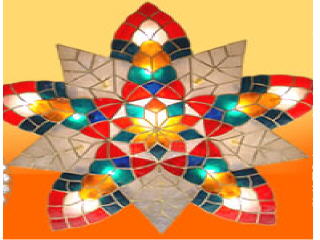
The Giant Lantern Festival is an annual festival held in December (Saturday before Christmas Eve) in the City of San Fernando in the Philippines. The festival features a competition of giant lanterns. Because of the popularity of the festival, the city has been nicknamed the "Christmas Capital of the Philippines".

The first lantern festival was held to honor President Manuel L. Quezon. At that time, Quezon made Arayat his rest area and converted Mount Arayat into a tourist resort. As a show of gratitude to Quezon, the people of San Fernando held a Christmas lantern contest to honor the first family. Quezon himself donated the prize for his lantern contest, which was personally awarded to the winner by First Lady Aurora Aragon Quezon.

In the years that followed, more innovations were introduced to the giant lanterns. Colored plastics replaced traditional papel de hapon. Large steel barrels called rotors also substituted the hand-controlled switches to manipulate the lights. And lanterns have grown in size, approximately 20-feet today, and illuminated by about 3,500 to 5,000 light bulbs.

source: wikipedia

According to Ivan Henares, the festival started from Bacolor.

The San Fernando lantern industry evolved from the Giant Lantern Festival of San Fernando. The festival, which is held every December, finds its roots in Bacolor where a much simpler activity was held. Following the transfer of the provincial capital from Bacolor to San Fernando in August of 1904, this parul event followed as well. "Ligligan Parul" was said to have started in San Fernando in the year 1904. But some say that the "Ligligan Parul" did not happen immediately after the transfer and in fact began in 1908.


See the entire article here.

Saturday, October 25, 2008

Ibalong Festival - Legazpi

ibalong festival

photocredit: marty

The Ibalong Festival is a week long series of festivities celebrated from October 25 to 31 every year. The festival’s name is derived from one of the province’s foremost epic, the ‘Ibalong’ which detailed the myths and legends of the region long before the colonizers came. Apart from commemorating a cultural landmark, the Ibalong Festival is also a celebration of the province’s people and their resiliency, given the string calamities that regularly befall the region given its typhoon-proned geographical location.

Like most fiestas in the country, the main event of Ibalong Festival is its choreographed dances performed in the streets of Legazpi City. Such performances depict the numerous myths and legends contained in the Ibalong epic of the province and are done with the majestic visage of the Mayon Volcano, with its perfect cone, as their backdrop. The street dances are commonly performed by students from high schools throughout Albay and some times even from those outside of the province are invited to participate in the street dance which also doubles as a contest.

Being a week-long celebration, Ibalong Festival also features other merry-making actitvities aside from street dances. Other attractions include street parties, band concerts in the evening, flea markets in the streets of the city, drag races, and fireworks display. With the uniqueness of Bicolano cuisine, food fests and cooking demos are also one of the main features of the festival.

source: Legazpi festivals

Friday, August 22, 2008

KADAYAWAN FESTIVAL-DAVAO

KADAYAWAN FESTIVAL IN DAVAO
The Kadayawan Festival is an annual festival in the city of Davao in the Philippines. Its name derives from the friendly greeting "Madayaw", from the Dabawenyo word "dayaw", meaning good, valuable, superior or beautiful. The festival is a celebration of life, a thanksgiving for the gifts of nature, the wealth of culture, the bounties of harvest and serenity of living.

Today, Kadayawan has transformed into a festival of festivals, with a number of spin-off festivals in the region. The festival honors Davao’s artistic, cultural and historical heritage, its past personified by the ancestral “lumads”, its people as they celebrate on the streets, and its floral industry as its representatives parade in full regalia in thanksgiving for the blessings granted on the city. A celebration that interfaces the three aspects: tribal; industrial and; arts and entertainment. The festivities are highlighted with floral floats, street-dancing competitions and exhibits that showcases the island's tourism products and services.

The usual schedule of the festival is on the 2nd week of August, however, with many lined activities, it becomes a month long celebration.

source: wikipedia

For more articles, you can go to the ff:

1.Kadayawan Festival
2. Kadayawan

Thursday, May 15, 2008

Pahiyas Festival- Quezon

kiping

photocredit: pahiyas festival

Every year, thousands of tourist and holiday makers flock to this historic town commended as one of the cleanest and most peaceful community in the country. Its cool, fresh and invigorating climate earns her the singular distinction of being called the Summer Capital of Quezon Province. The town’s natural scenic spots and colorful lifestyles add to the charm that entices both foreign and local tourists to visit the place. The San Isidro Pahiyas Festival held every May 15 has become one of the country’s tourist attractions prompting the Department of Tourism to list down Lucban as a tourist town and a cultural heritage site. During the San Isidro Pahiyas Festival, each household tries to outdo each other in friendly competition as they vie for honor of recognizing their creativity. As incentives to their effort, prizes were given to the winning pahiyas based on a given criteria. This accounts for some of the most curious décor that the unstoppable spirit of the festival tends to show. Decking the hall or decorating the wall with “Kiping” and agricultural harvest is what “PAYAS” or “PAHIYAS” literally means. Farmers show their bountiful produce such as chayote, radish, pepper and grains of rice. There are miniatures locally known as “ANOK”, fruits, vegetables and longganisa (local sausage) strung together in the most original fashion. Residents engaging in other forms of livelihood display their products too in thanksgiving. The handicraft manufacturer has his house decked with colorful buri/buntal hats, bags, placemats and others while the butcher has a head of roasted suckling pig (lechon) peeking from the window. The most traditional and certainly the most attractive décor comes of course in the form of “KIPING” which are adorn and strung together to form all sorts of shapes, from chandelier called “ARANGYA” to huge flowers. Kiping is made from ground rice flour, shaped using “cabal” leaves or other leaf forms and colored in radiant red, fuschia, yellow, green and other bright shades. When kiping catches the light of the sun it turns into a veritable cascades of color. The celebration is a form of thanksgiving for a bountiful harvest and in honor of the patron saint of farmers, San Isidro de Labrador. A procession of the image of San Isidro is planned long before the festival and it is said that houses along the route of the procession passes will be especially favored and blessed in the coming year. It is from this belief that the lavish decoration of the home began. After all, one must welcome the saint’s blessings with rapture and gratitude.

source: Philippine fiestas and festivals

Saturday, April 26, 2008

MAGAYON FESTIVAL-ALBAY


Magayon Festival

The Magayon Festival, though technically a festival for the whole province, is celebrated primarily in Legazpi City. The Magayon Festival derived its name from the word ‘magayon’ which translates to beautiful from Bicolano, the dominant language in the province of Albay and the adjacent regions. The festival was first enacted by the Albay’s governor and celebrated in 1998 to stimulate tourism in the province. It is basically a celebration of the province’s Catholic tradition and its unique traditional way of living thereby giving the festival a very local color which is perfect for those tourists who wants to experience Albay’s culture and heritage.

Aside from the usual Filipino way of celebrating festivals such as street dancing and communal feasting, the Magayon Festival also holds some attractions that feature and emphasizes Bicolano culture. One of such events is the regional cooking competition that aims to highlight the region’s unique culinary tradition. The contest focuses on the preparation of delicacies that are made using ingredients indigenous to Bicolano cuisine such as coconut and chili. The festivities of the Magayon Festival also include a marathon and an eco-camp, both of which are events aimed at fostering consciousness for the province’s environment, which is very much appropriate given Albay’s natural treasures such as the Mayon Volcano.

This festival is celebrated in the month of April.

source:Magayon Festival
For more about Magayon Festivals, see this.

Tuesday, January 23, 2007

Sinulog Festival-Cebu City

SINULOG FESTIVAL


uploaded by cathcath.com

photocredit


Philippine Pictures


The Sinulog is a dance ritual in honor of Santo Nino. It is held every year in Cebu City on the third Sunday of January.

This Sinulog dance which is the traditional and ritual dance in honor of Santo Nino is distinguished from the Ati-atihan from Panay Island.


Accompanied by the sound of the drums the sequences include the
all the time moving two steps forward followed by one step backward. Though the dance is already very old, the parade that characterized the festival was started onl in 1980.

Contrary to the belief of some, Sinulog was already danced by the locals in honor of their wooden statues in the period before the Cebuanos were baptized. Later on, after the image of the famous Santo Niño was brought to Cebu and the Catholic faith was established in the region, the dance was made a part of the early fiesta in honor of the Santo Nino.

While dancing, people are shouting petitions and thanksgivings to the Santo Nino. Shouting is necessary because the pilgrims have to be sure that they will be heard by the Santo Nino.
"Pit Senor! Senor Santo Nino."

,,,

Monday, January 22, 2007

ATI-ATIHAN-KALIBO, AKLAN

ATI-ATIHAN-KALIBO, AKLAN


uploaded by cathcath.com

SINULOG FESTIVAL is to Cebu City while the Ati-Atihan is a festival in honor of the Holy Infant Jesus in Kalibo, Aklan also celebrated in the third week of January. The dancing however is done on the rhythms of the drums that makes this festival comparable with carnival in Rio in Brazil.

A parade is participated by celebrants who paint their faces in many different ways and who are dressed in the most exceptional costumes.

The practise of painting the faces was long observed before the
Spaniards came. It symbolized the friendship between the light-skinned immigrants from the island of Borneo (Kalimantan) in Indonesia and the Atis, the local people of Panay. The Ati (negritos), a small and dark (black) kinky-haired people, sold them a small piece of land and allowed them to settle down in the lowlands. The Atis themselves, lived more upland in the mountains.

One time the Ati people was in need of food because of a bad harvest in their homelands. They came down to the lowlands of the Maraynon and asked them food. Every year since then, the Atis came down to the lowland inhabitants to ask for some food. They danced and sang in gratitude for the help.

,,,,

Tuesday, January 9, 2007

PROCESSION OF THE BLACK NAZARENE, QUIAPO, MANILA

PROCESSION OF THE BLACK NAZARENE, QUIAPO, MANILA


uploaded by cathcath.com


Every 9th of January of the year and on Good Friday, a large procession takes
place through the streets of Quiapo, a small part of metro Manila. The procession which
dates back from the 17th centuryis joined by thousands of with the life-sized, black wooden statue of Jesus (of Nazarene). These men walk barefoot as a sign of humility.
The men yell "Viva Senor" to the Statue brought to Manila in 1606. People believe that a miracle can happen after touching it.


All participants in the procession hope that they will have the opportunity to touch the wooden statue. They hope that this will protect them from harm and ensure health in the future. Some of them follow the statue during the procession because they believe it is an atonement of their sins or hope for some miracle.


,,,,

Friday, December 15, 2006

Simbang Gabi

Simbang Gabi


Christmas in the Philippines starts when the month of the year ends with the BER.

This is when radio stations start playing Christmas carols on the air.
Ours is one country that celebrates a mixture of Western and native Christmas traditions.

We send Christmas cards, decorate our houses with Christmas trees, mistletoes, Santa Claus and long strings of lights.
Manila and Makati, the two prime cities are converted into little Paris because of the galore of lights.

The Filipino Chistmas traditions however begin in December 15 for the dawn mass or Simbang Gabi. Masses are held as early as 5' o clock in the morning for nine consecutive days which culiminate on December 24, Christmas eve.

Young people look forward to seeing their friends dressed in their best; office workers come in their work clothes and mothers come with their sleepy kids whose motivation to come is the bibingka and puto bumbong that they buy after the mass.


back to Now What,Ca t


,,